How to read the fine print on your water bill to find hidden leaks
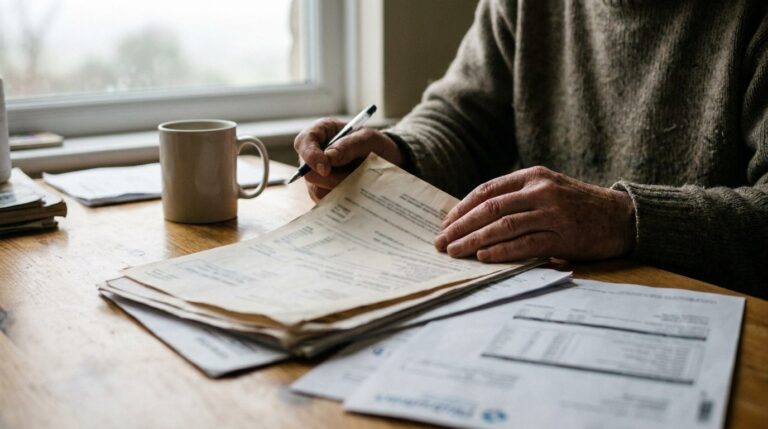
A water bill is one of the few bills that will tell you something is physically wrong with your house, if you know which number to look at.
Most people look at the amount due and nothing else. The amount due is the least informative figure on the page.
Find the consumption figure
Somewhere on the bill there is a number for how much water you actually used. It will be in gallons, or in hundreds of cubic feet, written as CCF or HCF.
One CCF is 748 gallons. That conversion is worth writing on the bill the first time, because utilities switch between the two units without explanation and the difference matters.
Next to it there should be a comparison, usually the same period last year and sometimes the previous month. That comparison is the whole point of the document.
Do the daily arithmetic
Take the consumption, divide by the number of days in the billing period, and you have your average daily use.
Write it on the bill. Do this every time and within a year you have a baseline for your own household, which is far more useful than any national average.
A rough guide is sixty to a hundred gallons per person per day in a typical American home, but the range is wide and it depends on whether you irrigate, how old the fixtures are, and how many people are actually there.
What matters is your own trend. A jump of thirty percent with no change in the household is a leak until proven otherwise.
Where the money hides
A lot of bills charge sewer based on water consumption, on the assumption that what goes in comes out. So a leak that never reaches a drain, a running irrigation line or a pipe under the lawn, can be billed twice: once as water and once as sewer for water that never entered the sewer.
Many utilities offer a leak adjustment that credits the sewer portion once a leak is repaired and documented. You have to ask, you usually have to apply within a set window, and you generally need a plumber's invoice. Ask about it before you pay a large bill.
Look also for tiered or block rates. Many systems charge more per unit as you use more, so a leak does not increase the bill proportionally. It increases it faster than proportionally, because the extra volume is billed in the expensive tier.
Finding the leak
The classic test. Turn off every tap and every water using appliance, then go and look at the meter. If the little triangular or star shaped dial is turning, water is moving somewhere.
Most meters now also have a leak indicator built into the display.
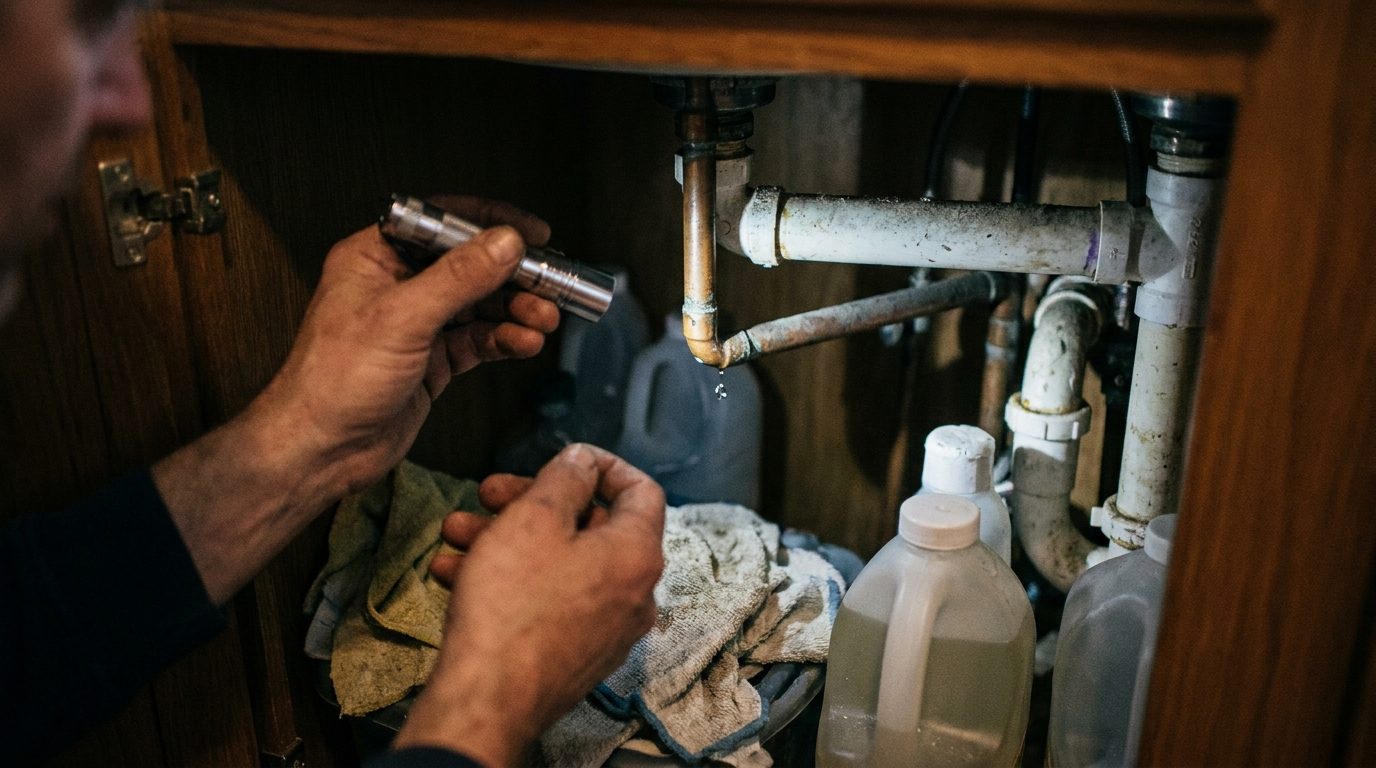
Then the toilet test, because the toilet is the single most common culprit and it is silent. Put a few drops of food colouring in the tank, leave it half an hour without flushing, and look in the bowl. Colour in the bowl means the flapper is leaking. A worn flapper can waste a couple of hundred gallons a day and makes no sound at all.
Then check outside taps, the irrigation system, and any water softener that may be stuck in a regeneration cycle.
If the meter is running with everything off and the fixtures are all clean, the leak is likely in the service line between the meter and the house. That is usually the homeowner's responsibility and it is the expensive one.
Disputing a bill
If the consumption figure is wildly out of line with your history and you can find no leak, ask for a meter test. Most utilities will do one, sometimes free and sometimes for a fee refunded if the meter is faulty.
Ask also whether the reading was an actual read or an estimate. Estimated reads are common and they get corrected later, which produces one low bill followed by one alarming one.
Put a dispute in writing, include your own daily use calculation, and keep a copy. Pay the undisputed portion while it is being reviewed so that nothing gets shut off.
The habit
Keep the last twelve bills in a folder and write the daily average on each one.
I started doing this after a member came into the credit union in tears about a bill she could not pay, and it turned out her irrigation valve had been stuck open since April. Nobody had told her the bill contained the evidence. It had been on the page for three months.
Five minutes a month, and it is the cheapest leak detection there is.