
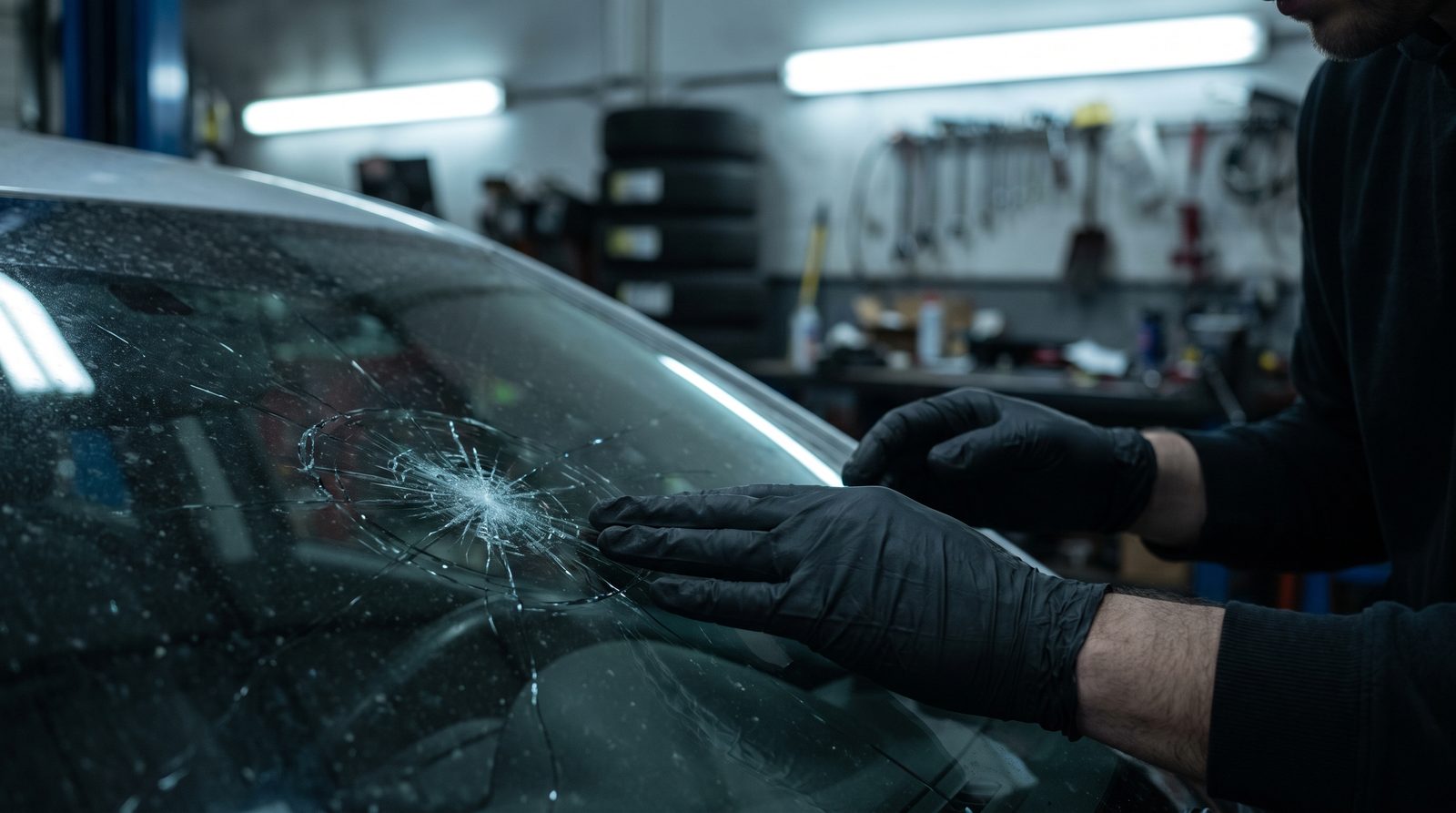
How your auto insurance deductible affects windshield claims
A chip in a windscreen is one of the few insurance questions where the right answer is often to not make a claim at all, and the arithmetic takes about a minute.
Glass sits in an odd corner of an auto policy. It is covered under comprehensive rather than collision, and comprehensive is the part that handles things that happen to the car while you are not driving into anything.
The repair versus replace split
A chip smaller than a coin, away from the driver's line of sight, can usually be repaired with resin. That takes half an hour and costs well under a hundred dollars in most places.
A crack that has spread, or damage in the driver's view, means replacement. That is a different order of cost, and on a modern car it is much higher than people expect.
Do the repair early. A chip that could have been filled for eighty dollars becomes a nine hundred dollar replacement the first cold morning you run the defroster on high. I saw that sequence constantly.
The deductible arithmetic
If your comprehensive deductible is five hundred dollars and the replacement is seven hundred, the insurer pays two hundred. You are paying five hundred out of pocket either way, and you now have a claim on your record.
If the replacement is four hundred, the insurer pays nothing at all. Filing that claim achieves precisely nothing except a claim record.
So the first question is not whether it is covered. It is whether the cost exceeds the deductible by enough to be worth it.
Get a written quote from a glass shop first. Then compare.
The state rules that change the answer
Several states have specific laws about glass, and where they apply they change everything.
A handful of states require insurers to waive the deductible entirely for windscreen replacement, meaning the glass is covered in full. Others require the deductible to be waived for a repair, but not a replacement, which is one reason shops push repair so hard.
These rules vary and they change. Ring your insurer and ask directly whether your state or your policy has a glass provision, or look at your state insurance department's website.
Separately, a lot of insurers sell a full glass endorsement for a modest annual premium that removes the deductible for glass. If you drive a lot of highway miles behind gravel trucks, that is usually worth having.
Cameras behind the glass
This is the part that has changed the arithmetic in the last ten years and a lot of drivers have not caught up.
Most newer vehicles have a camera and sometimes radar mounted at the top of the windscreen, driving lane keeping, automatic braking and adaptive cruise. Replace the glass and that system has to be recalibrated, sometimes statically in a shop with a target board, sometimes dynamically on a road drive, sometimes both.
Recalibration is a real procedure with a real cost, and it can add several hundred dollars to the job. It is not optional. A camera looking through new glass at a slightly different angle is a safety system that is quietly wrong.
If a shop quotes a replacement that sounds cheap for a car with driver assistance, ask specifically whether recalibration is included and how it will be done.
Will it raise your premium
A single comprehensive glass claim is generally treated more gently than an at fault collision, and in some states insurers are restricted in how they can use glass claims.
Generally is not always. Several comprehensive claims in a short period will get attention, and it can affect renewal.
That is another argument for paying for a small repair yourself and keeping the claim for something that matters.
What I would do
Fix chips immediately and pay for it out of pocket. Keep the receipt.
For a replacement, get a quote, check your deductible, check whether your state or policy waives it, and only then decide.
Use a shop that will put the recalibration in writing.
And if your deductible is high enough that glass is effectively never covered, ask what the full glass endorsement costs. For a lot of drivers it is a small annual figure against a predictable risk, which is the one situation where buying more insurance is straightforwardly sensible.